959
The Porsche 959 was a vision of the future disguised as an 1980s car. It was first conceived in 1981 and shown publicly as the "Gruppe B" concept in 1983, built to compete in Group B rallying. Porsche needed to sell road-legal versions to homologate it for racing, so only 292 production cars were built from 1986 to 1988. This was not a car built to be profitable. It was a statement. Dave Pankew, writing for Motorsport.com in 2016, describes it as essentially a 911 shell with a ridiculous amount of tech stuffed inside. (2)
What made the 959 so far ahead of its time was how many things it invented at once. The PSK all-wheel drive system had four driver-selectable modes, dry, wet, snow, and ice, and automatically shifted torque between the front and rear wheels depending on grip. The sequential turbocharging system was a world first: a smaller turbo spooled up quickly at low revs for instant power, while the larger turbo came in at higher RPM for full output, producing around 450 horsepower total. There were two dampers per corner, one controlling stiffness and one controlling ride height, which automatically lowered the car at speed. All of this produced a 0 to 60 time of around 3.2 seconds and a top speed of 197 mph in a manual car, in the 1980s. (2) Cars like the Ferrari F40 and the Jaguar XJ220 get more attention from that era, but the Porsche 959 had more technology than both of them combined, and most other manufacturers didn't catch up for decades.
(2) Pankew, Dave. "Cutaway Classic: Explore the Amazing Porsche 959." Motorsport.com, June 8, 2016.
Primary source for this gallery: Csere, Csaba. "1987 Porsche 959 Archived Test." Car and Driver, November 1987..
Featured
Selected artifacts
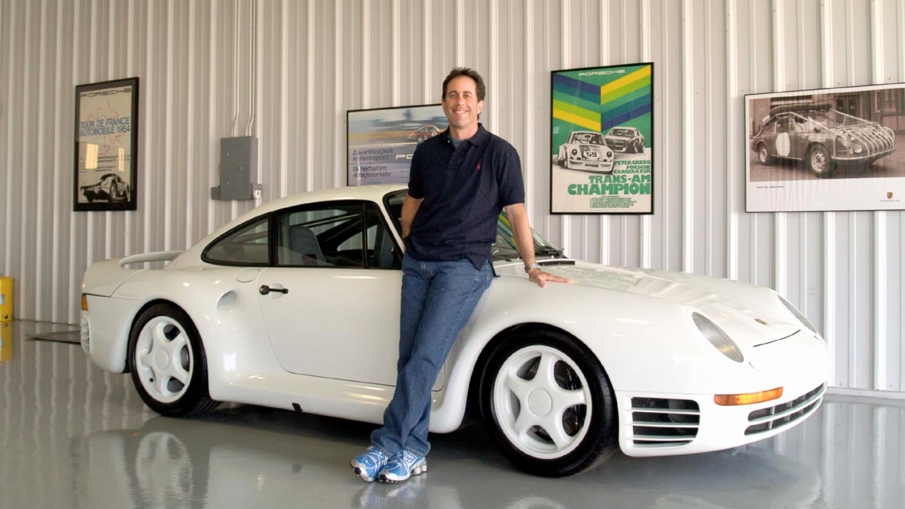
This editorial photograph was published by Driven Car Guide in 2024 in Driven Car Guide's online article "Mr Bean Buys a Porsche 959, and Other Famous Owners". It shows Jerry Seinfeld standing next to his Porsche 959. He has a collection of over $100 million worth of cars, and this is one of the most famous in the collection. I found this source at https://www.drivencarguide.co.nz/news/mr-bean-buys-a-porsche-959-and-other-famous-owners/. This artifact is significant to my exhibit because it shows that this is a car that's not just worshiped by people who love the brand Porsche and cars, but also by famous people who use it as a status symbol and something that tells more than the heritage of Porsche.
Driven Car Guide. "Mr Bean Buys a Porsche 959 — and Other Famous Owners." Driven Car Guide, 2024. https://www.drivencarguide.co.nz/news/mr-bean-buys-a-porsche-959-and-other-famous-owners/ (Fair use, editorial) [Source]
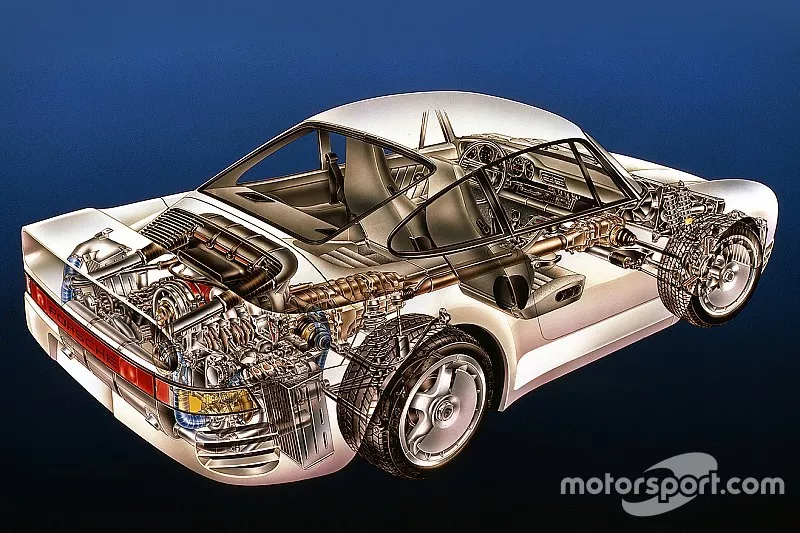
This illustration was drawn by David Kimble in 1985 (originally published in Motor Trend, September 1985; republished 2016) and republished by Motorsport.com in its 2016 Cutaway Classic feature. It shows the technology that's inside this car. There are a few other cutaways that show more in-depth of the inside of what these cars are. I found this source at https://www.motorsport.com/automotive/news/cutaway-classic-explore-the-amazing-porsche-959-745046/745046/. This artifact is significant to my exhibit because it just goes to show the amount of technology that was put into these cars. You can see the axle, the two suspension arms that adjust automatically, and some of the other insane features of this car. It just goes to show the complexity in the engineering behind this feat of technology.
David Kimble, Porsche 959 Cutaway Illustration, 2016, Motorsport.com. (Fair use, educational, editorial illustration) [Source]
 2 pages
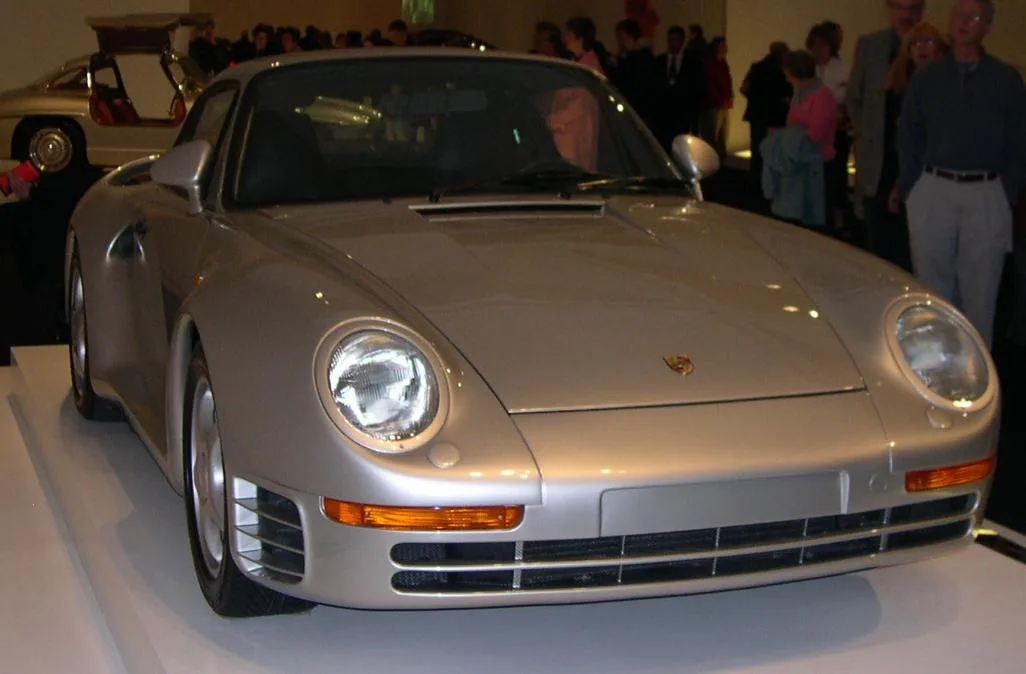
Ralph Lauren Porsche 959 Collection
This photograph was taken by an uncredited photographer circa 2005-2010 and archived at Wikimedia Commons under CC BY-SA 3.0. It shows the Ralph Lauren collection Porsche 959. This source is held at https://commons.wikimedia.org/wiki/File:Porsche_959_34_left.jpg. This artifact is significant to my exhibit because you can see how many people treasure this car, and it's a car that's meant for the elite nowadays. It's something that even famous designers and others use as a status symbol, even among their own community. It just goes to show how exclusive these types of cars are and how much they really define themselves.
Uncredited, *1988 Porsche 959 Komfort, Ralph Lauren Collection*, Wikimedia Commons, CC BY-SA 3.0.
 4 pages
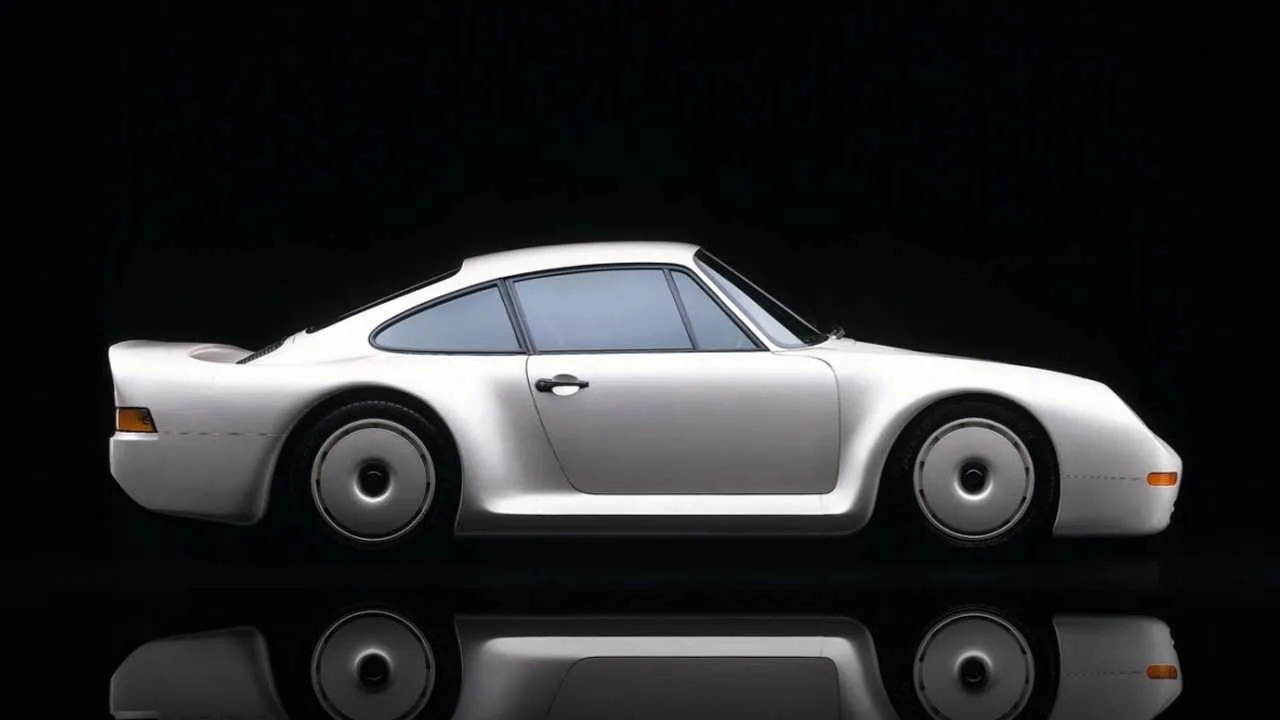
Porsche Gruppe B 1983 Frankfurt IAA
This press photograph was released by Porsche AG in September 1983 as factory press material for the 1983 Frankfurt International Auto Show, with two of the four pages reproduced via StuttCars and two by Wikimedia Commons contributor leduardo (2007). It shows a set of pictures of the prototype Gruppe B Porsche rally car, before it came into production, made for the Group B Porsche rally. This source is held at https://www.stuttcars.com/porsche-959-gruppe-b/. This artifact is significant to my exhibit because a lot of these cars become concept cars and never actually make it to market. You can also see how the design changed from the concept to the production. Some might argue that the concept looked better and more futuristic, but I think there's nothing more unmistakable and nostalgic than how the 959 actually turned out. This just goes to show that part of the process of creating one of these cars is going through these concept phases.
Porsche AG, *Porsche 'Gruppe B' Concept at 1983 Frankfurt IAA*, 1983, factory press photograph via StuttCars.
Gallery
Additional artifacts
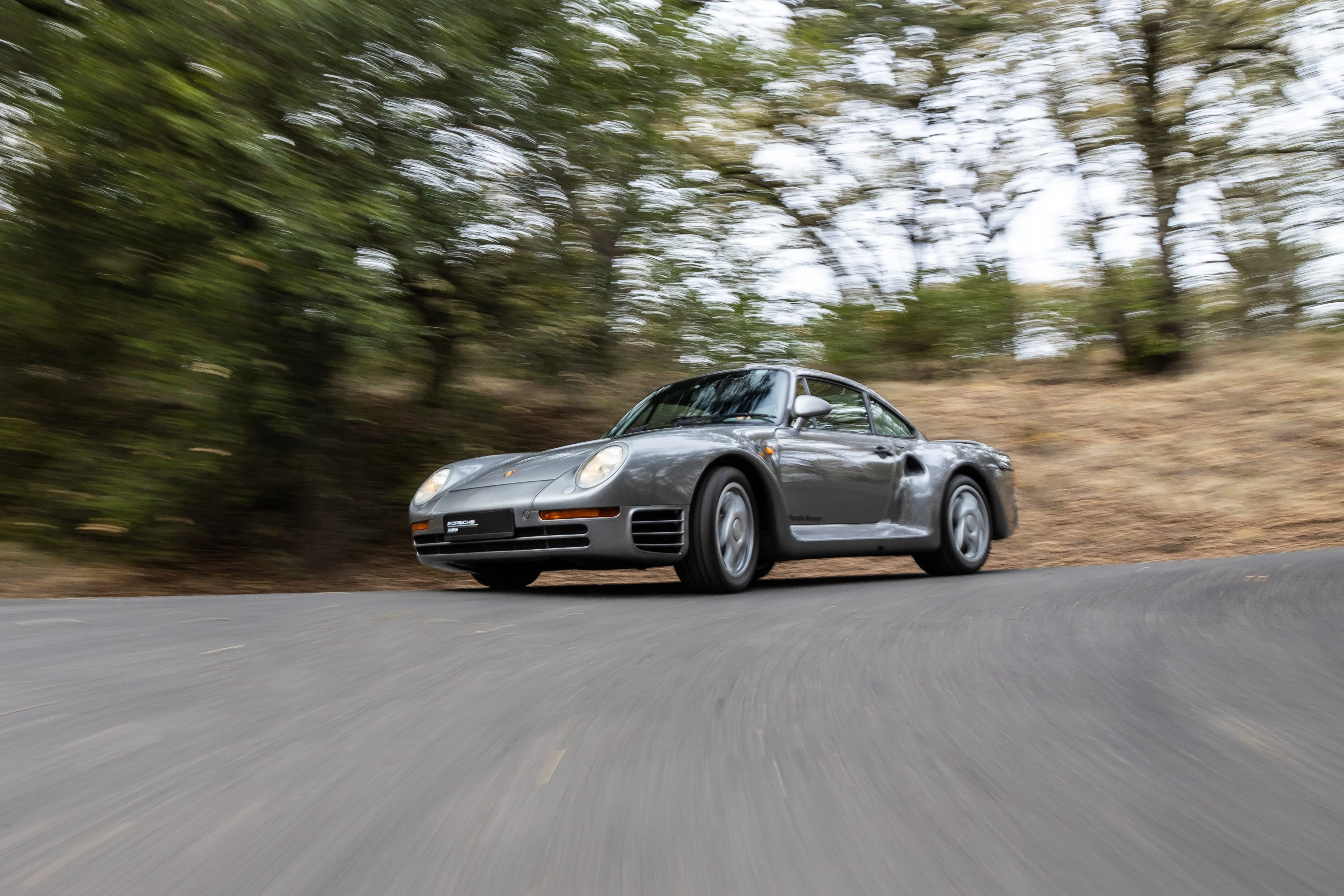
Page 1 of 1 — Car and Driver, Porsche 959 Studio Photograph, 1987, via Hearst archives.
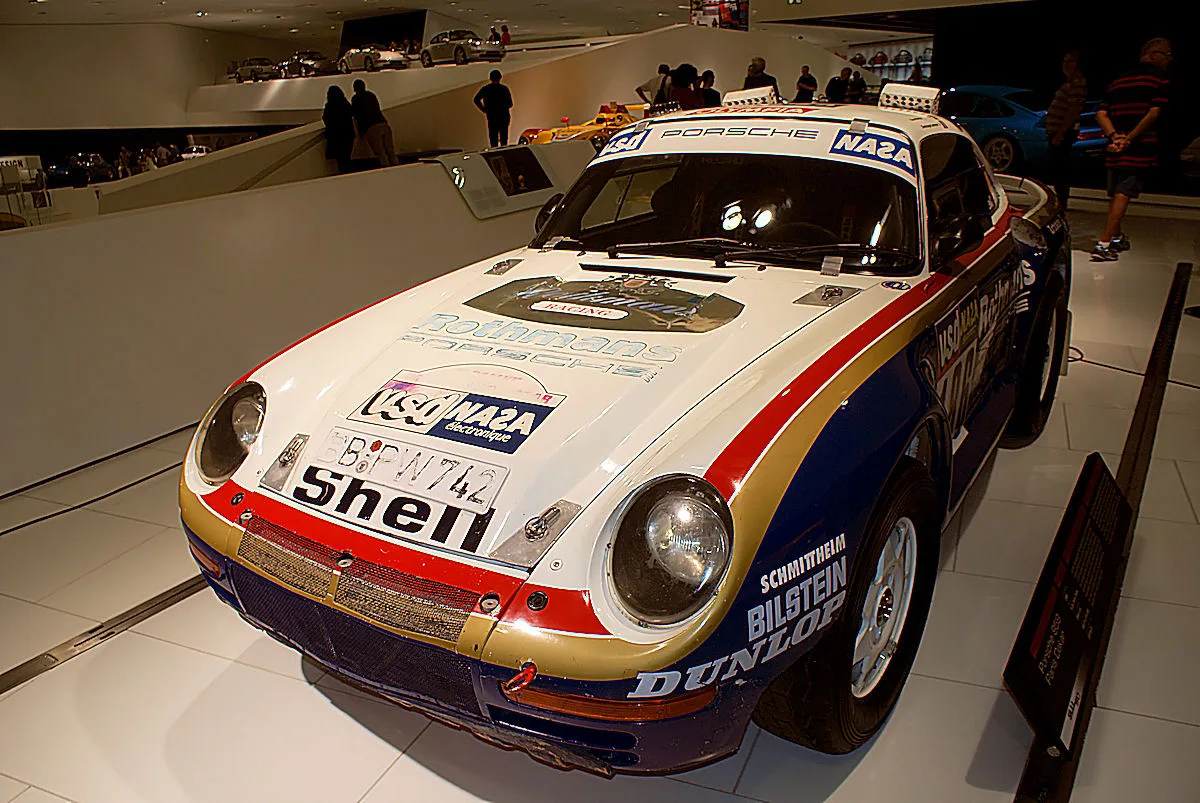
Valder137, *Porsche 959 1986 Paris-Dakar Rothmans Racer*, 2013, Wikimedia Commons, CC BY 2.0. [Source]
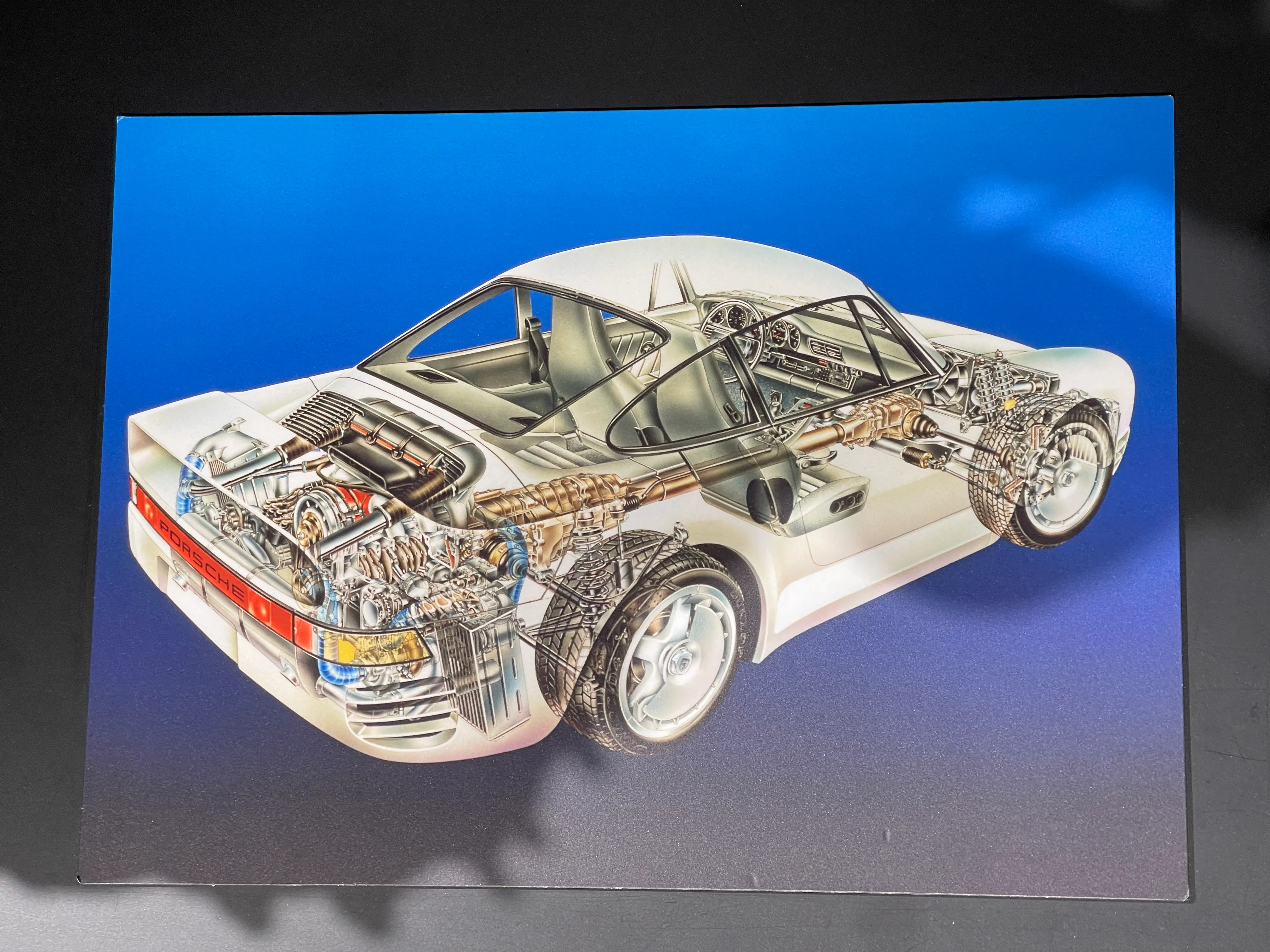
Rouk40130, *Porsche 959 Mechanical Sketch at Stuttgart Museum*, 2024, Wikimedia Commons, CC BY 4.0. [Source]
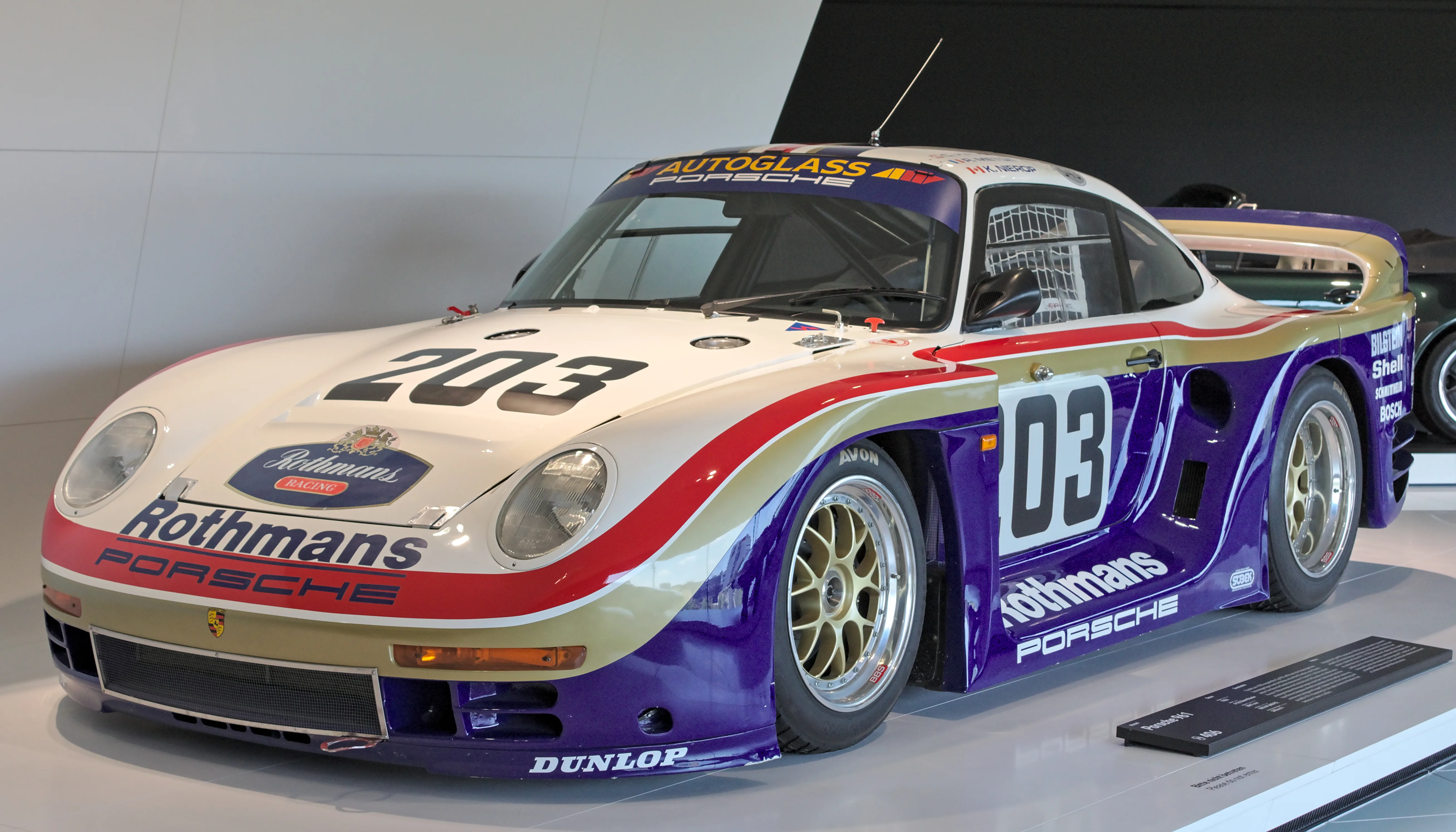
Alexander Migl, *Porsche 961 (1987 Le Mans No. 203) in the Porsche Museum*, 2020, Wikimedia Commons, CC BY-SA 4.0. [Source]
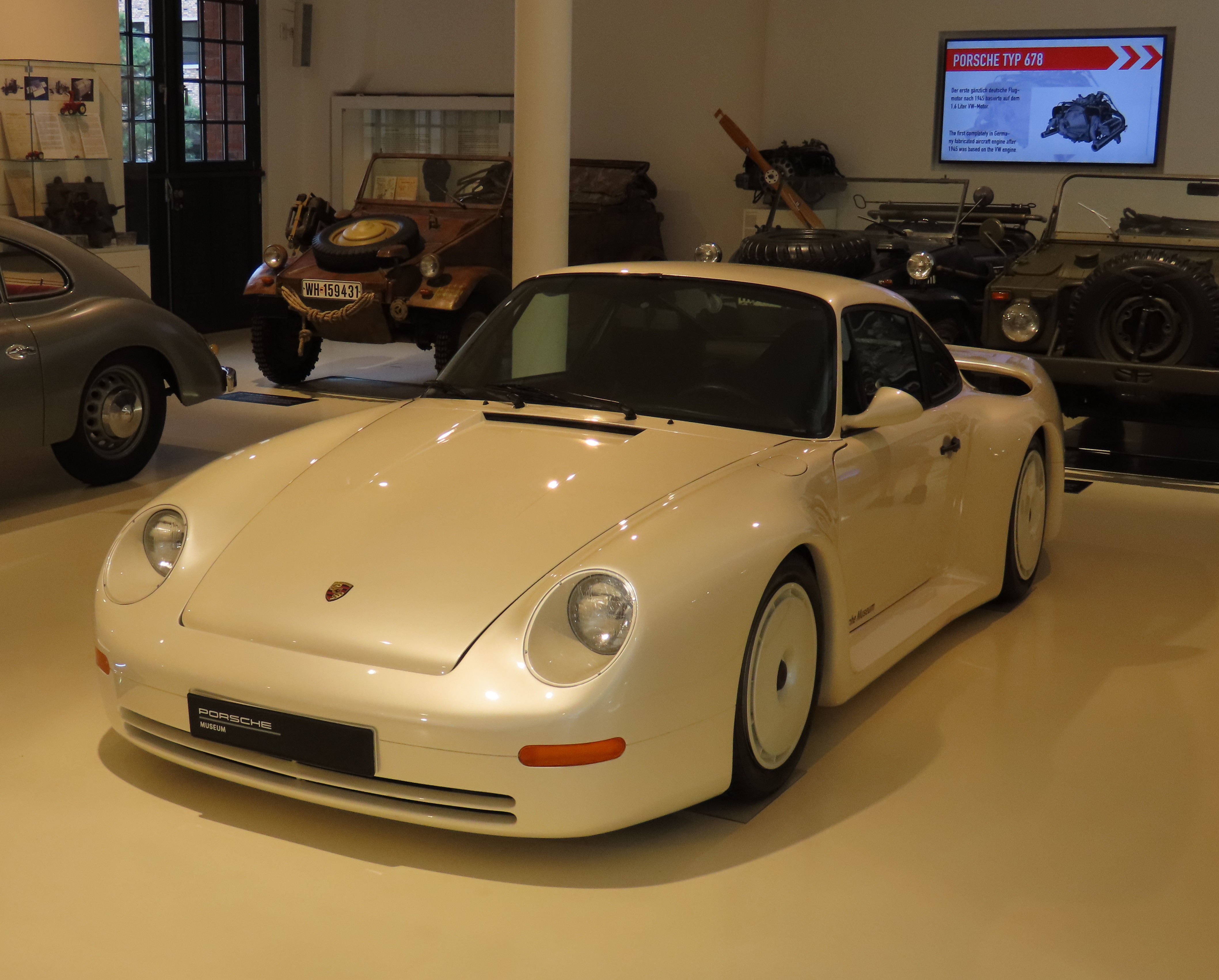
Ad Meskens, Porsche 959 Prototype Group B at Hamburg Prototyp Museum, 2024, Wikimedia Commons, CC BY-SA 4.0. [Source]
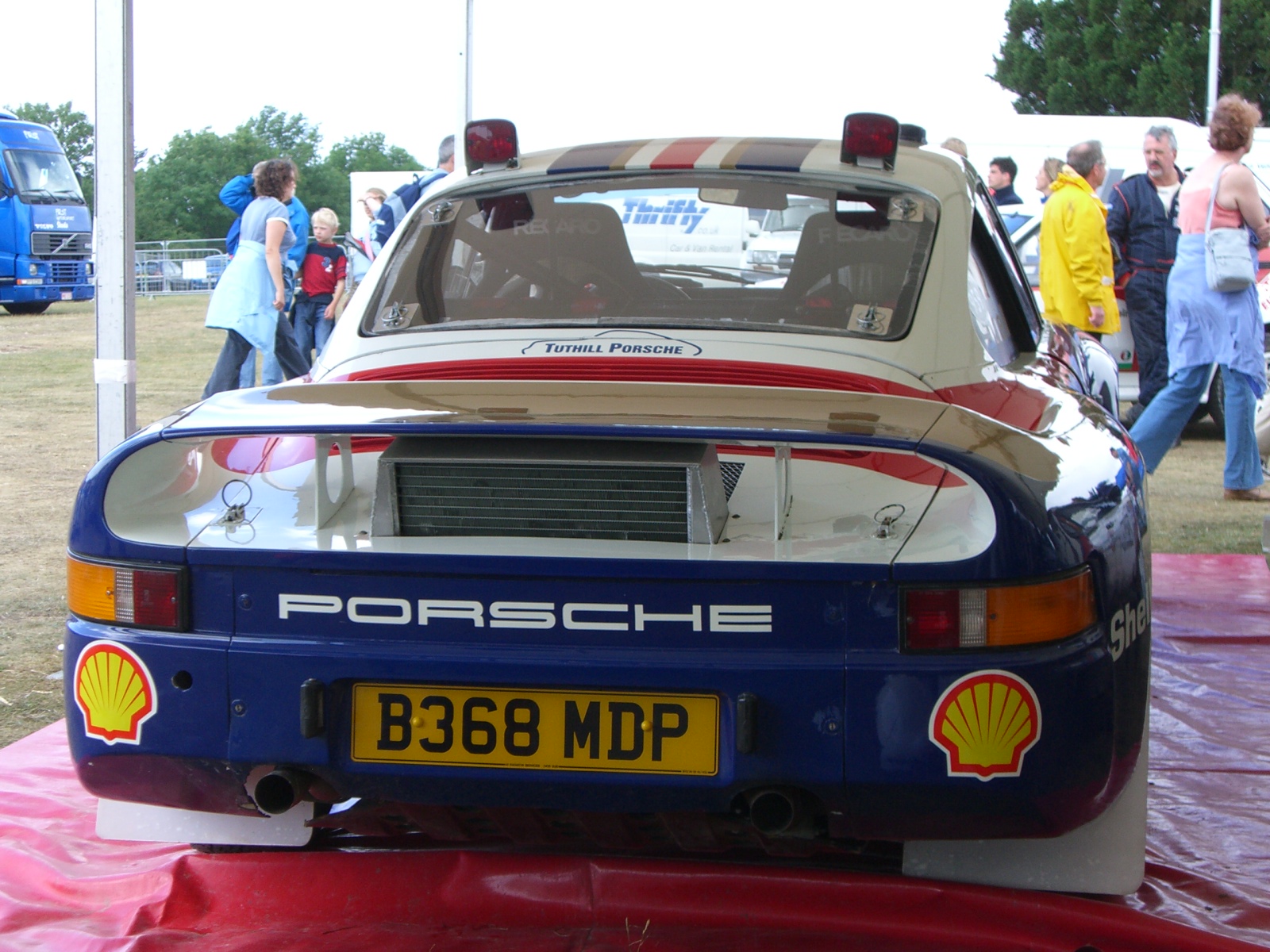
edvvc, 1985 Porsche 959 Paris-Dakar, Flickr / Wikimedia Commons, CC BY 2.0. [Source]