Countach
The Lamborghini Countach was a statement of design. Before it, supercars were teardrop-shaped, think old Ferraris and Bugattis, smaller and rounded. The Countach was wide, low, and shaped like a wedge, and it created a new design language that cars are still following today. Bertone designer Marcello Gandini unveiled the LP500 prototype at the 1971 Geneva Motor Show and orders flooded in. Production of the LP400 began in 1974. The car only went into production because founder Ferruccio Lamborghini bet that test driver Bob Wallace could drive the prototype to Sicily and back. If it made it, they would build it. The prototype made it in May 1972. This was the car that truly saved Lamborghini from financial ruin, a company that had started building tractors and was now setting the standard for what an exotic car could be.
As iconic as it looks, the rear wing on the Countach is completely nonfunctional. The engineers zeroed out its angle because it actually made the aerodynamics worse, but customers loved the look. Because Lamborghini could not afford to re-certify the car with a new aero part, completed cars were pulled off the assembly line and into the factory parking lot, where workers bolted the wing on with an electric hand drill, about ten minutes per car. The car also never went through a proper wind tunnel. Engineers taped fabric strips to the body, drove it on the freeway, photographed it, and adjusted the shape based on the pictures. When they ran official top speed tests, they removed the mirrors, altered the suspension, and added intake spacers, anything to beat Ferrari. (3) The rivalry between Lamborghini and Ferrari at the time was fierce, and this car was their weapon.
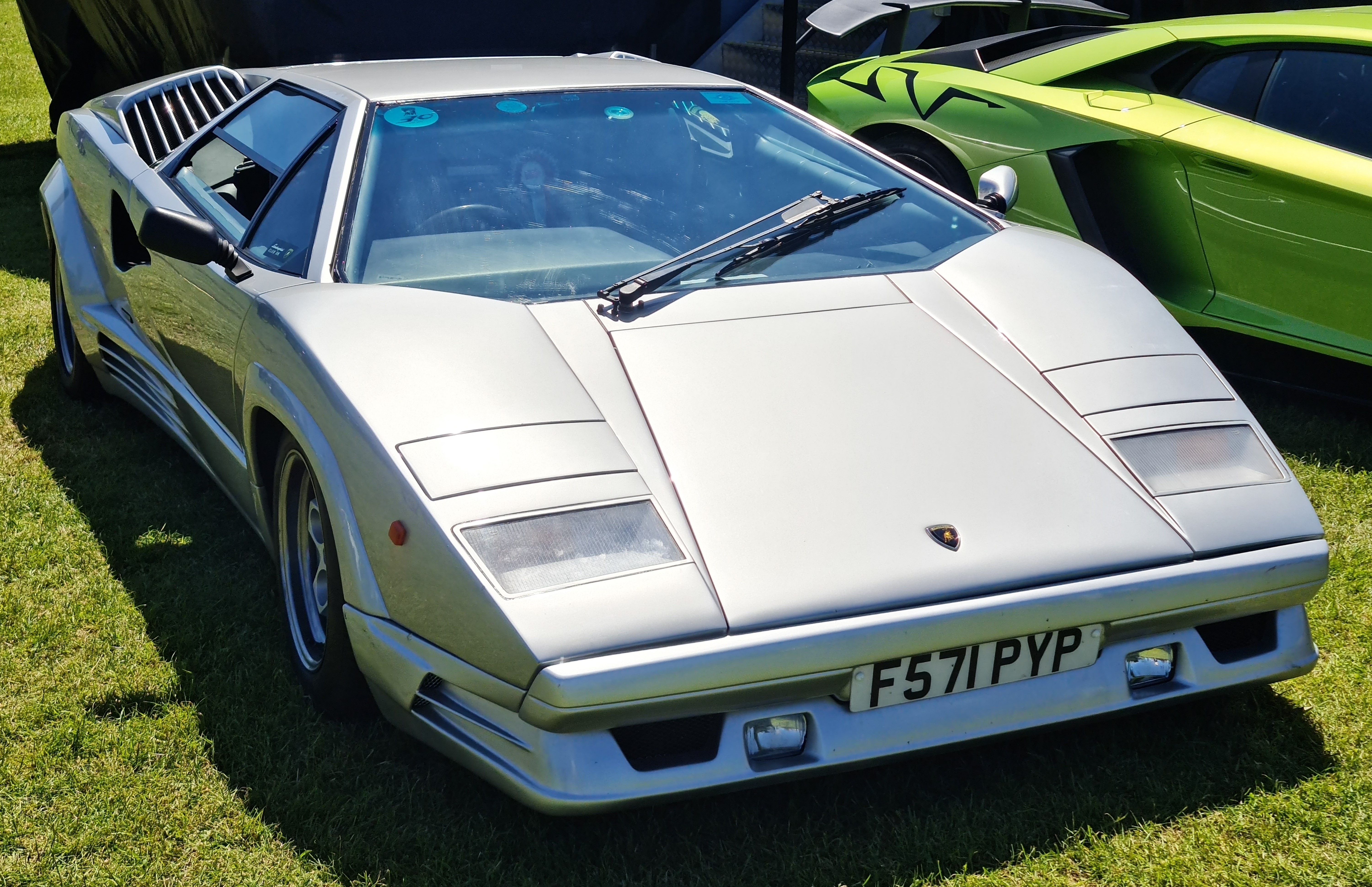
Production ran for sixteen years, from 1974 to 1990, across five major variants, the LP400, LP400S, LP500S, Quattrovalvole, and the 25th Anniversary edition, which is the white car famously driven in The Wolf of Wall Street. Each revision added more horsepower, wider tires, and more aerodynamic body parts, but each one also moved further from Gandini's original clean and simple design. More recently, Lamborghini released a modern Countach to celebrate the original, a limited-run revival that sold for millions per car, proving that fifty years later the design still speaks for itself. The scissor door became the defining visual symbol of the exotic car. Every supercar has referenced it. The car that was only built because of a bet, whose famous wing was bolted on in a parking lot, ended up being the shape that defined an entire era.
(3) Prince, Max. "5 Things You Didn't Know About the Lamborghini Countach." The Drive, September 19, 2016.
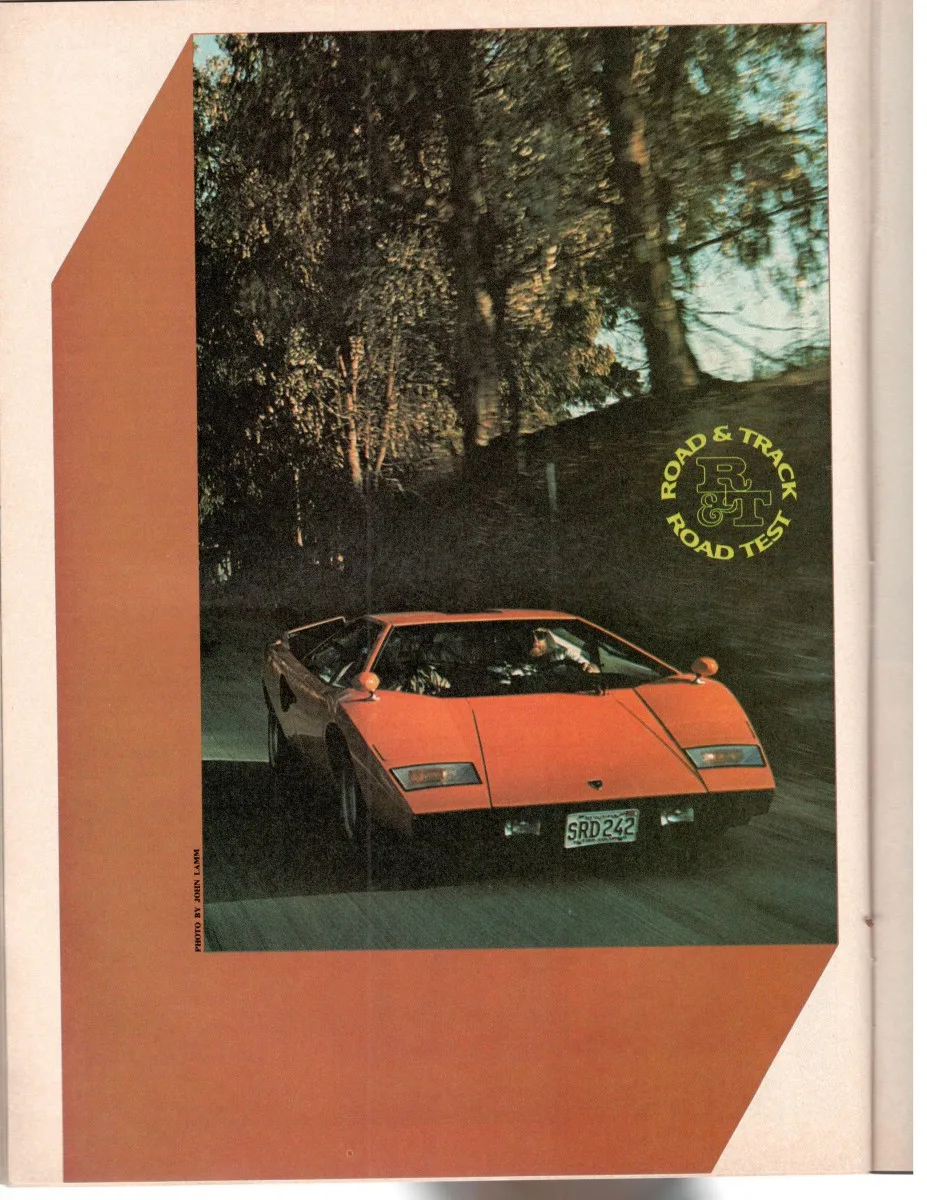
Primary source for this gallery: Road & Track, "Lamborghini Countach Road Test," February 1976..
Featured
Selected artifacts
 4 pages
Road & Track Feb 1976 Countach Road Test
This magazine scan was published by Road & Track magazine's editorial staff in February 1976 in the February 1976 issue of Road & Track, with the four-page road test scanned and republished by the automotive history blog Curbside Classic in 2018. It shows a firsthand representation of what this car was, a true in-depth showing of the numbers that were tested, not what Lamborghini was given to them, but calculated data from this test, really putting the car to see what it was like. I found this source at https://www.curbsideclassic.com/vintage-reviews/road-track-vintage-road-test-1976-lamborghini-countach-fastest-car-weve-ever-tested/. This artifact is significant to my exhibit because it gives a perspective on the time period, the kind of stuff this car was compared to, and the article shows how different it is from what they were used to and how fast it was able to go, all things that were absolutely mind-blowing for the time period of 1976. It's super important in this museum to give that firsthand account of what people would actually be reading about back then and showing some depth into that.
Road & Track, "Lamborghini Countach Road Test," February 1976, via Curbside Classic.
 4 pages
The Drive — 5 Things About the Countach, 2016
This editorial photograph was published by Chris Perkins for The Drive (with photographs largely uncredited inline) on September 19, 2016 in The Drive's vintage column under the title "5 Things You Didn't Know About the Lamborghini Countach". It shows photos from different sources, you can see the actual founder of Lamborghini, and one of the pictures of the Lamborghini Countach being assembled. There's also another photo of the Countach at one of the unveilings where it was first shown, you can see that wedge shape before they put the wing on it. I found this source at https://www.thedrive.com/vintage/5226/5-things-you-didnt-know-about-the-lamborghini-countach. This artifact is significant to my exhibit because they did all of this in-house fabrication by hand, which they hadn't done for a long time, and that really made the Countach super special. It's just cool and important to see the concept of the Countach, how it came together, and the man behind it all.
Chris Perkins, The Drive, 2016, inline image 2.
 3 pages
Bertone Designers
This photograph was taken by an unknown period photographer (with one image by Jesse Alexander) between 1974 and 1985 and archived at Wikimedia Commons in the public domain. It shows the designer of the Countach, Marcello Gandini, in 1976. A few times you can see that he was super prevalent, he looks like an Italian man and was prevalent in the design of this car. This source is held at https://commons.wikimedia.org/wiki/File:Marcello_Gandini_in_1976.jpg. This artifact is significant to my exhibit because I think it's important to show the people that worked behind creating these cars, and that it's more than just a car, it's the people who came to make them.
Unknown photographer, *Marcello Gandini in 1976*, 1976, Wikimedia Commons.
 3 pages
Countach 25th Anniversary Edition
This photograph was taken by MrWalkr and Jones028 (Wikimedia Commons contributors), with one auction catalog photograph by RM Sotheby's, between 2014 and 2023 and archived at Wikimedia Commons under CC BY-SA 4.0 and CC BY 2.0, with one image from RM Sotheby's December 2023 auction catalog for the Wolf of Wall Street car. It shows the 25th Anniversary Edition. This was the edition that was in The Wolf of Wall Street, and you can see that picture here, along with the sold version of it from Sotheby's auction from The Wolf of Wall Street. This source is held at https://commons.wikimedia.org/wiki/File:1988_Lamborghini_Countach_25th_Anniversary_Silver.jpg. This artifact is significant to my exhibit because it shows how the car evolved. It still looks like the same car, but with some more modern features, they just couldn't overcome how great of a design they came up with that first time.
MrWalkr, 1988 Lamborghini Countach 25th Anniversary Silver, 2021, Wikimedia Commons, CC BY-SA 4.0.
Gallery
Additional artifacts
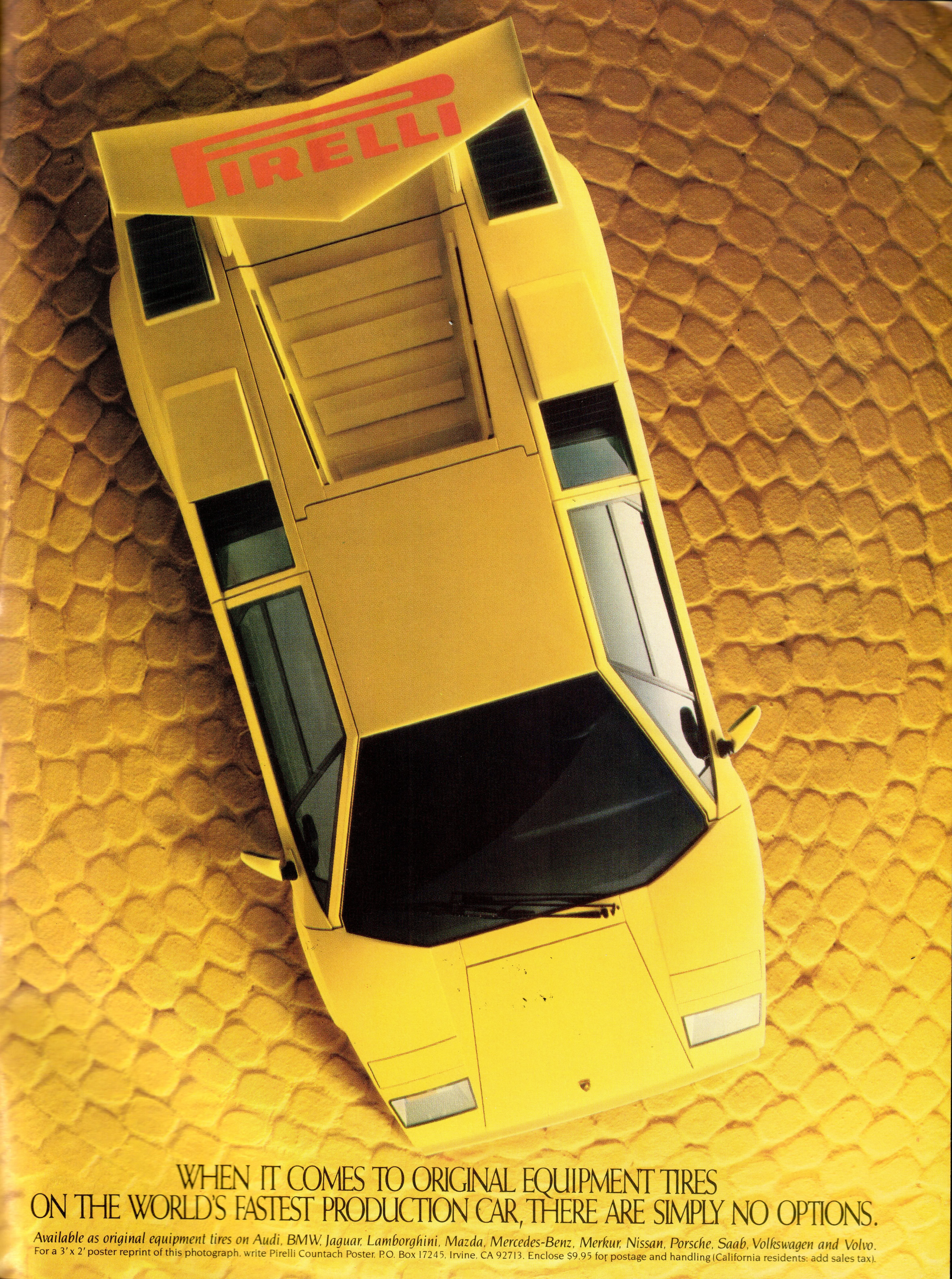
Pirelli, *Countach Top View Poster*, April 1986, Wikimedia Commons. [Source]
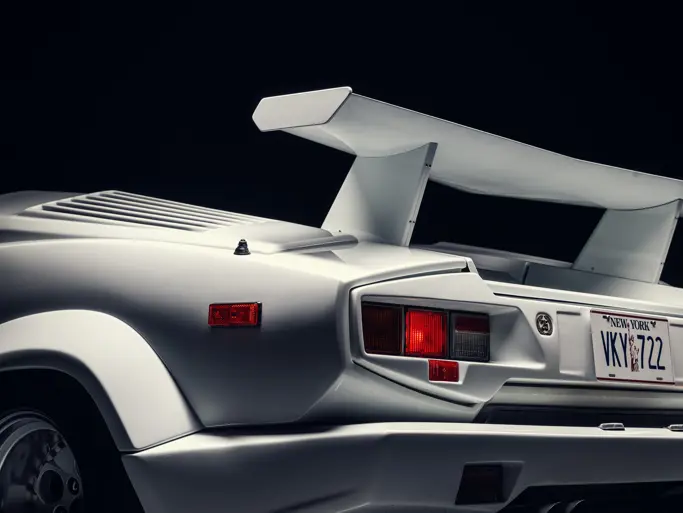
RM Sotheby's, *1989 Lamborghini Countach 25th Anniversary from The Wolf of Wall Street*, December 2023 auction catalog. [Source]
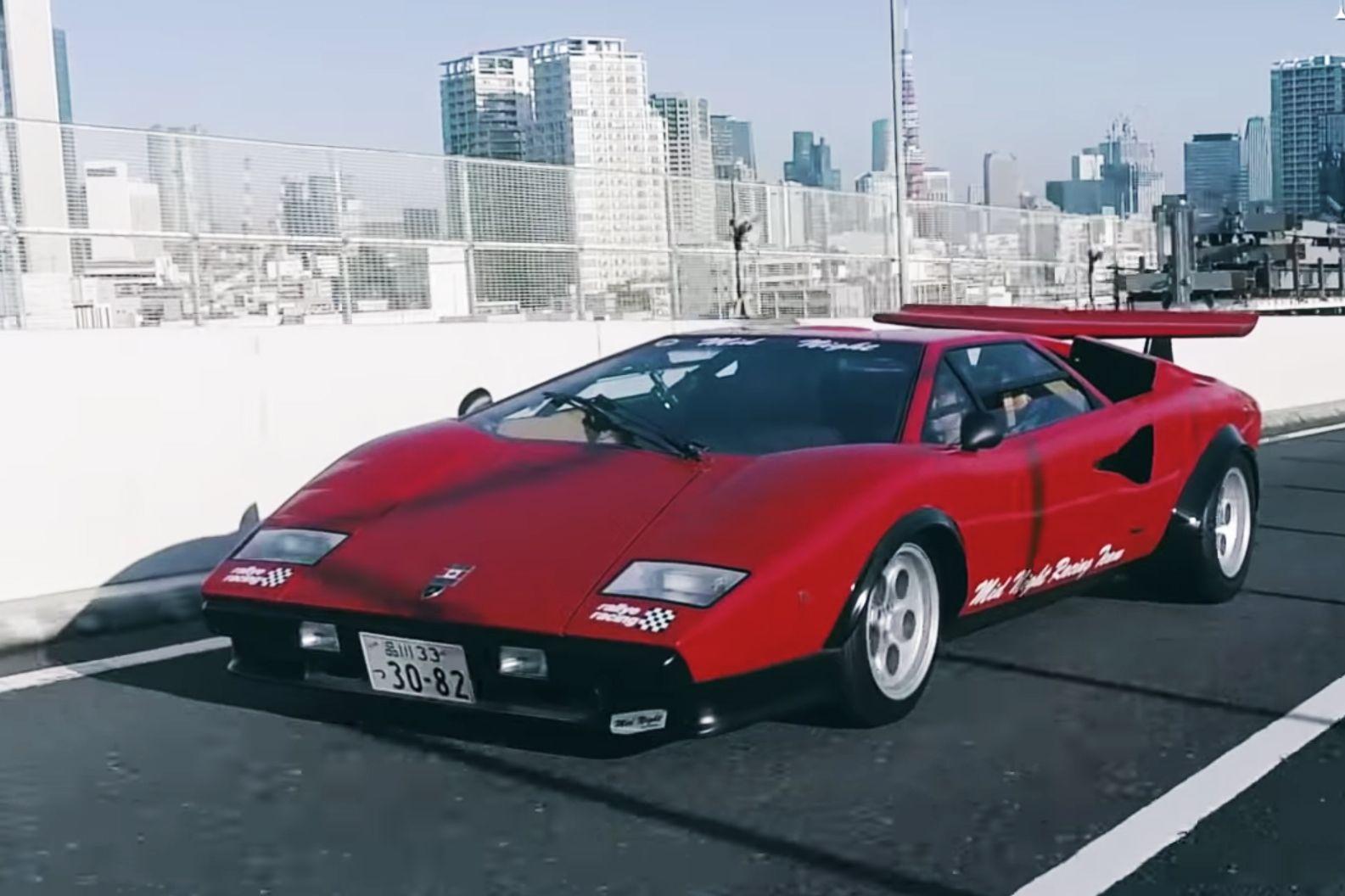
Page 1 of 4 — Lamborghini / Walter Wolf archive, "Walter Wolf with Countach LP400 Speciale," c. 1976, via LamboCars.com.
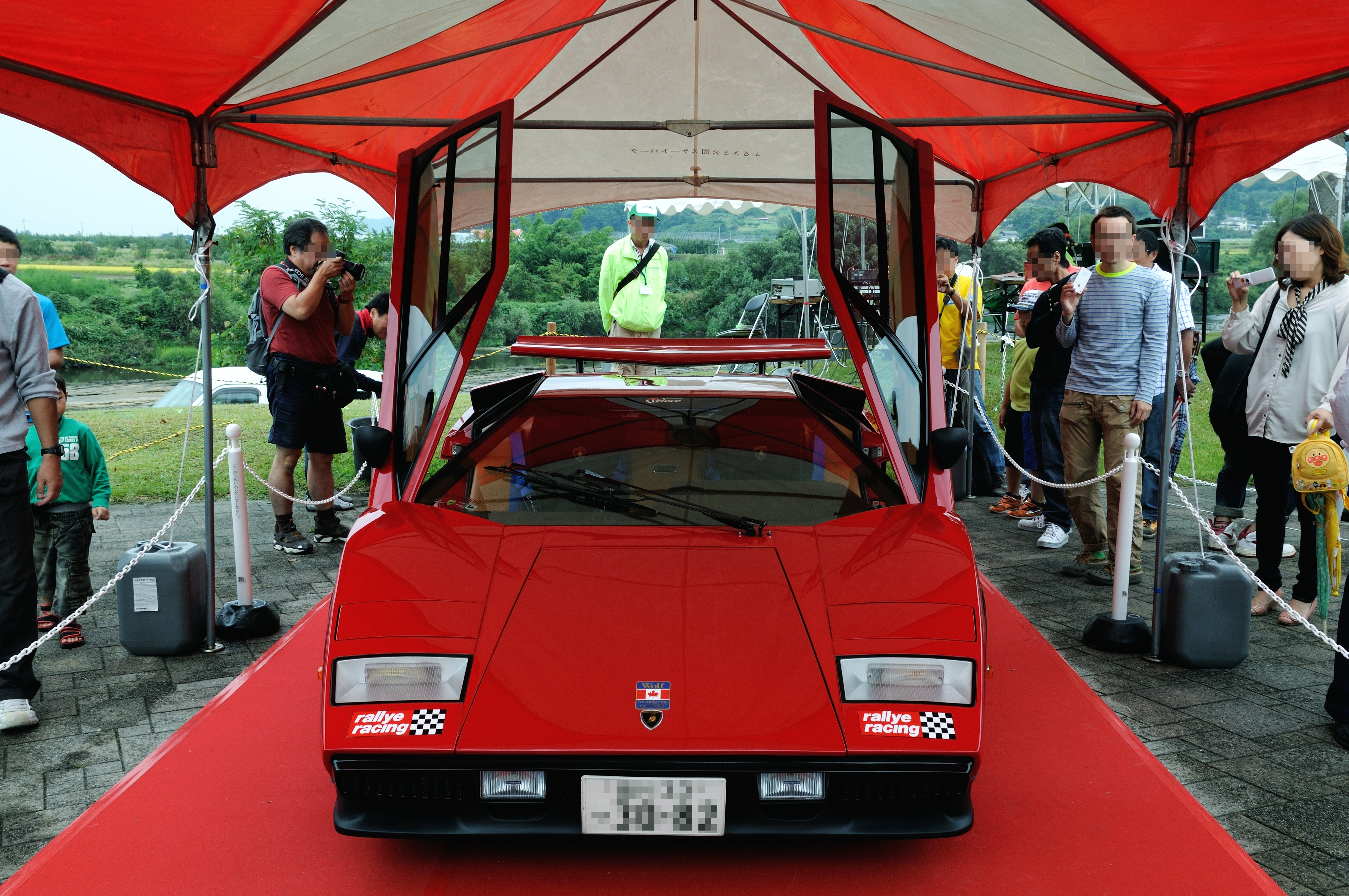
Page 2 of 4 — contri, Lamborghini WOLF Countach, 2012, Wikimedia Commons, CC BY-SA 2.0.
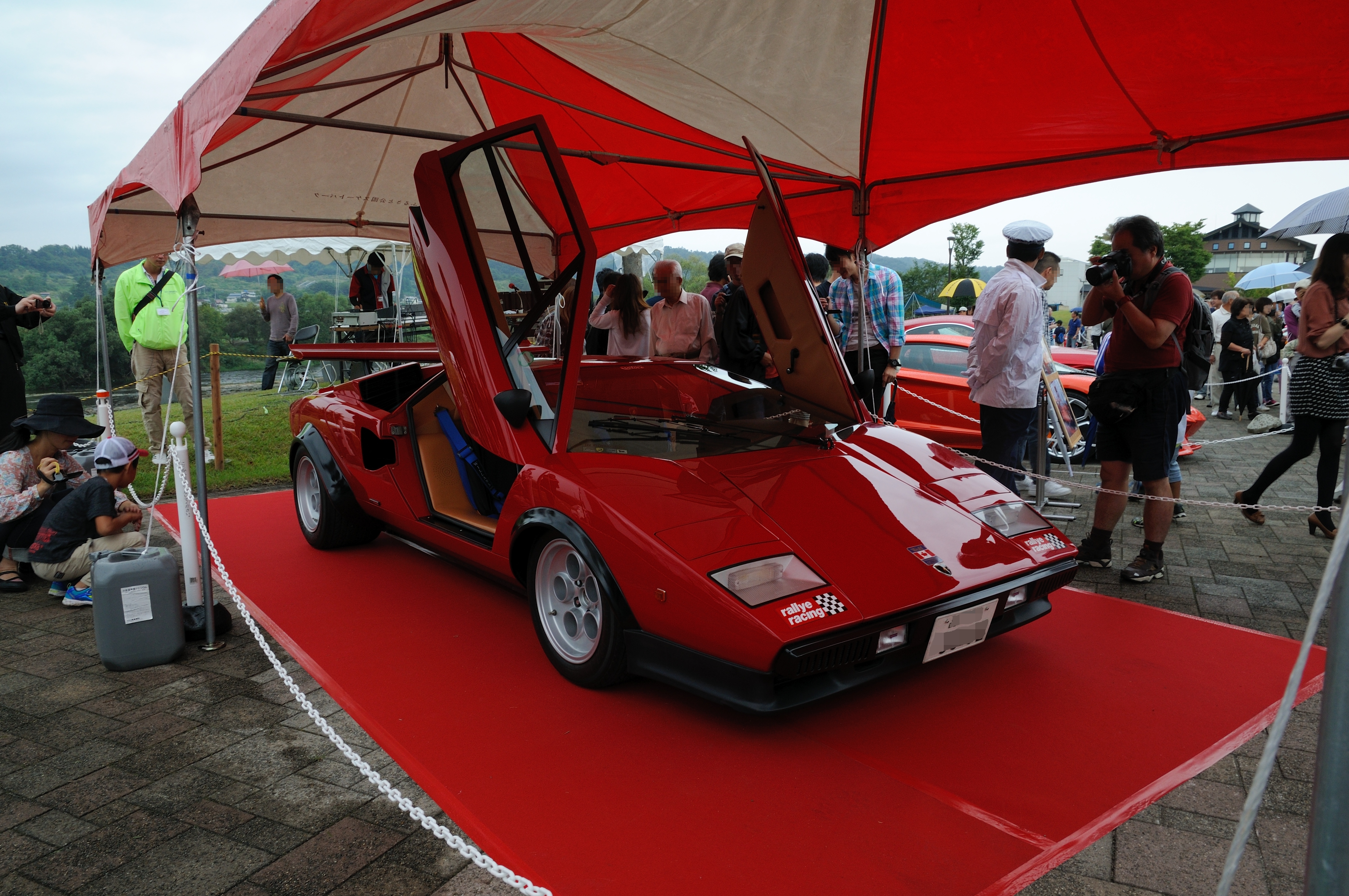
Page 3 of 4 — contri, Lamborghini WOLF Countach, 2012, Wikimedia Commons, CC BY-SA 2.0.
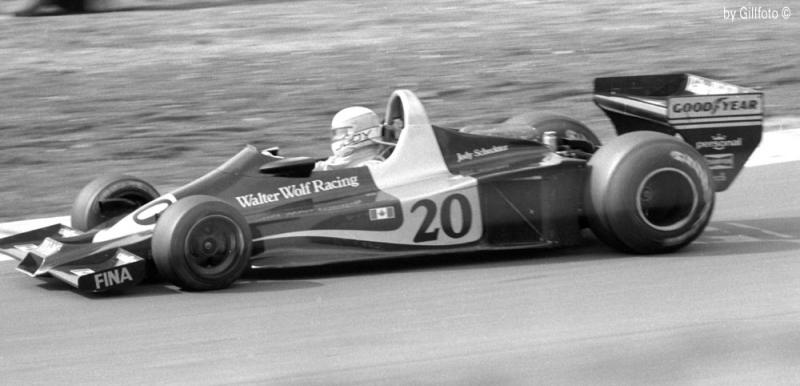
Page 4 of 4 — Gillfoto, Jody Scheckter in the Walter Wolf F1 at Brands Hatch, 1977, Wikimedia Commons, CC BY-SA 3.0.
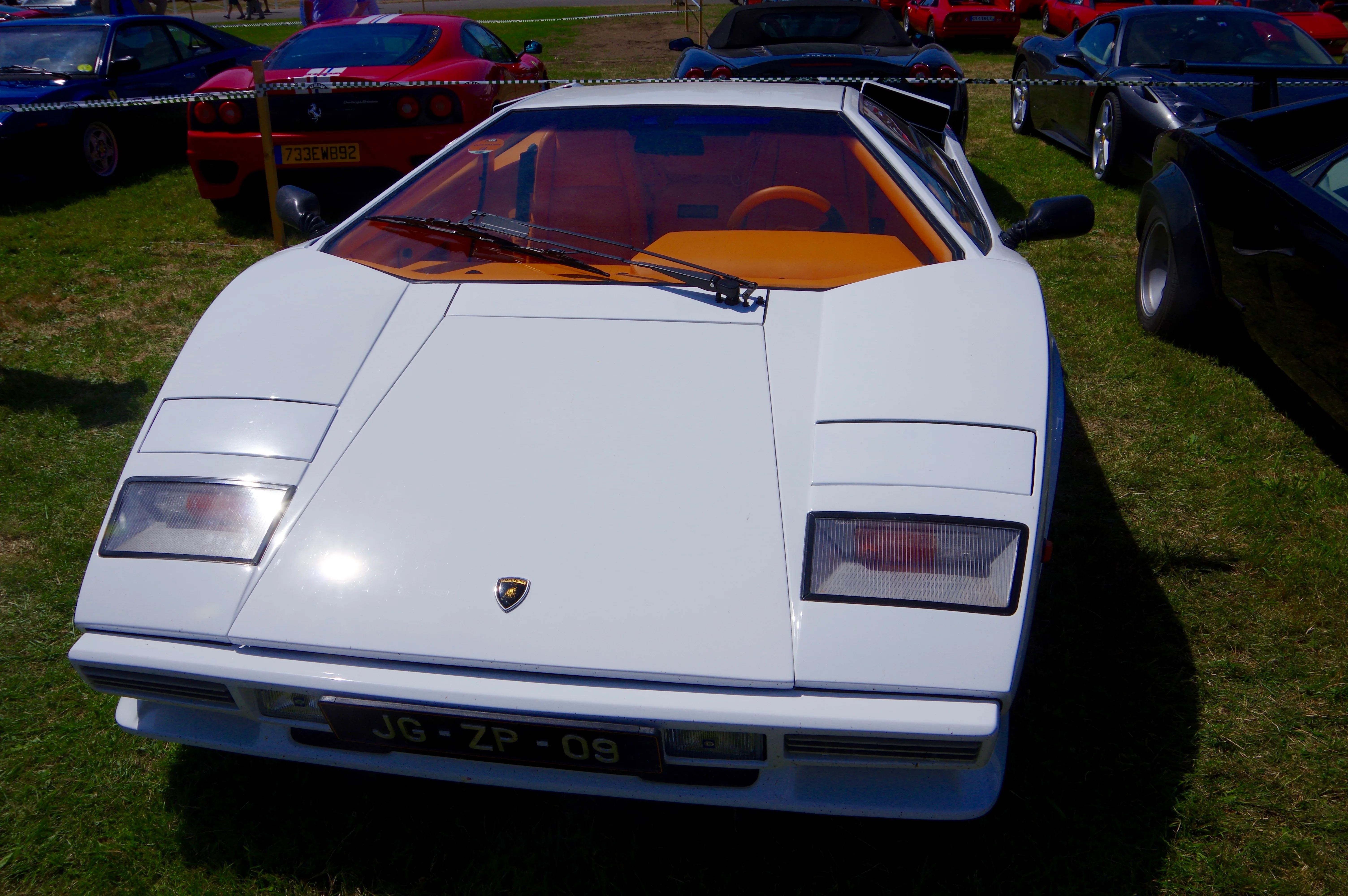
Dave Hamster, *Lamborghini Countach LP500 Prototype*, 2016, Wikimedia Commons, CC BY 2.0. [Source]